Visa Interview Coaching: How Indian Students Can Prepare Confidently for the US Visa Interview
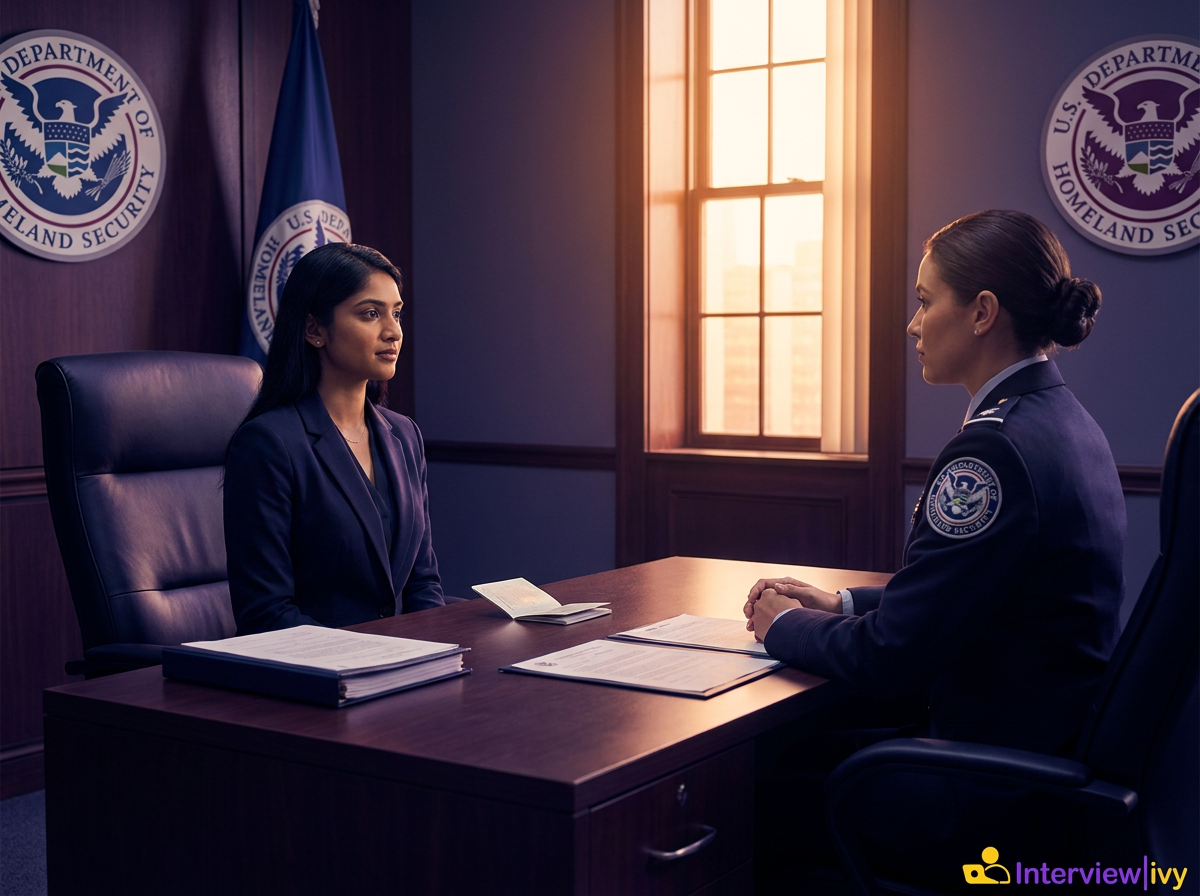
Getting a US visa is one of the most nerve-wracking milestones in an Indian student's journey. Whether you're applying for an F1 student visa, a B2 tourist visa, or any other non-immigrant category, the interview at the consulate can feel like a high-stakes test with no clear syllabus.
Here's the truth: consular officers are not trying to catch you out. They're evaluating whether you're a genuine applicant who meets the visa criteria. The students who walk out with a visa approval are the ones who understand that evaluation criteria and prepare accordingly.
This guide covers everything you need — what the interview actually tests, the most common visa interview questions and answers, why applicants get rejected, a 7-day preparation plan, and how AI mock interview coaching is changing the way Indian students prepare.
What Does a Visa Interview Actually Test?
Consular officers make decisions quickly — often in under five minutes. They're trained to assess four core pillars in every interaction:
- Non-immigrant intent: Do you genuinely plan to return to India after your visit or studies? This is the most scrutinized factor, especially for F1 student visas.
- Financial stability: Can you or your sponsors actually afford your stay, tuition, and living expenses without becoming a burden on US resources?
- Credibility: Is your stated purpose consistent with your documents, your DS-160 form, and the way you answer questions?
- Ties to your home country: Do you have compelling reasons to return — family, a job offer, property, ongoing education — that make overstaying unlikely?
Every question a consular officer asks maps back to one or more of these four pillars. When you understand this framework, even unexpected questions stop feeling random and start feeling answerable.
The 5 Most Common Visa Interview Questions (and How to Answer Them)
These US visa interview questions for students come up repeatedly across consulates in Mumbai, Chennai, Hyderabad, Delhi, and Kolkata. Prepare confident, concise answers for each.
1. Why did you choose this university and this program?
Show research, not just rankings. Mention a specific faculty member, lab, or curriculum feature that aligns with your goals. Vague answers like "it's a good university" are red flags.
2. Who is sponsoring your education and what is their income?
Be precise. Know the exact figures — annual income, savings, property assets. Hesitating on financial details creates doubt about the credibility of your documentation.
3. What will you do after completing your degree?
This is the non-immigrant intent question in disguise. Describe a clear plan to return — a job offer, a family business, a career path that is stronger in India than in the US.
4. Have you applied to other universities? Why did you choose this one?
Mention two or three other applications to show you did your due diligence. Then explain why this specific institution won out. Consistency with your DS-160 is essential here.
5. Do you have any relatives in the United States?
Answer honestly. If you do have relatives there, proactively mention that they will not be financing your stay and that you have strong reasons to return to India.
Why Most Applicants Fail Their Visa Interview — And How to Avoid It
Visa rejections are rarely about documentation gaps alone. After analyzing hundreds of rejection patterns, four triggers appear most often:
- Inconsistency with the DS-160: If your spoken answers don't match what you filled in on your application form, officers notice immediately. Review your DS-160 the night before and know it cold.
- Vague financial answers: Saying "my father is a businessman" without knowing figures, account numbers, or asset values raises serious doubts. Officers want specifics, not generalities.
- Over-rehearsed, robotic answers: Memorized scripts sound exactly like memorized scripts. Officers are trained to identify them. The goal is to sound prepared but natural — like you're having a conversation, not reciting lines.
- Visible nervousness without substance: Nerves alone don't cause rejections, but nervousness combined with unclear answers signals that an applicant may not genuinely know their own story. Confidence comes from practice, not just knowledge.
The fix for every one of these is the same: structured practice with realistic feedback. Reading visa interview questions and answers online is a start, but it doesn't replicate the pressure of an actual interview environment.
How to Prepare for Your Visa Interview in 7 Days
You don't need months to prepare well. A focused 7-day plan is enough to walk in confident.
- Day 1: Read your DS-160 from beginning to end. Note every detail — dates, addresses, sponsors, travel history.
- Day 2: Map your answers to the four pillars. Write out how you would address non-immigrant intent, finances, credibility, and ties to India.
- Day 3: Compile your documents folder. Organize every supporting document in the order you'll reference it.
- Day 4: Do your first full mock interview. Practice answering US visa interview questions out loud — not in your head.
- Day 5: Review your feedback and identify weak spots. Focus on the questions where your answers felt hesitant or unclear.
- Day 6: Do a second full visa interview mock test. This time, focus on pacing, eye contact, and sounding natural.
- Day 7: Light review only. Re-read your DS-160, get a good night's sleep, and trust your preparation.
How AI Mock Interviews Are Changing Visa Interview Coaching
Traditional visa interview preparation meant either expensive one-on-one coaching, practicing with a friend who doesn't know consular patterns, or reading static Q&A lists that can't respond to your specific answers.
AI-powered platforms like Interviewivy are changing this entirely. Here's what makes AI mock interview coaching different for visa interview preparation:
- Consular interview patterns built in: The AI is trained on real visa interview question structures — the follow-up questions, the pressure tests, the clarification probes that consular officers use when an answer feels incomplete.
- Instant, structured feedback: After every session, you receive a detailed breakdown of your answers — what landed well, where your non-immigrant intent story was unclear, where your financial credibility felt weak.
- Vocal tone and confidence analysis: Using emotion and tone AI, Interviewivy can tell you when you're sounding hesitant, rushed, or over-rehearsed — feedback that a printed guide simply cannot provide.
- Practice on your schedule: Whether it's midnight before your interview or a Sunday morning six weeks out, AI mock interviews are available 24/7 with no booking required.
- No judgment, no pressure: The biggest barrier to realistic practice is the fear of being judged. An AI interviewer removes that entirely — you can stumble, restart, and try again without embarrassment.
F1 visa interview coaching has historically been out of reach for most students — either too expensive or too generic. AI mock interviews make genuinely personalized, pressure-tested preparation accessible to every applicant, regardless of location or budget.
Frequently Asked Questions About Visa Interview Preparation
How long does a US visa interview take?
Most non-immigrant visa interviews last between 3 and 10 minutes. The brevity is exactly why every answer needs to be clear and confident — there's very little time to recover from a weak opening.
Can I practice visa interview questions and answers online?
Yes, and you should — but reading answers is not the same as practicing them out loud under simulated pressure. Use written guides to build your knowledge base, then practice with an AI mock interview tool to turn that knowledge into confident, natural delivery.
What should I wear to a US visa interview?
Business casual is the standard recommendation. The goal is to look composed and credible — not formally overdressed or casually underprepared.
How many times can I apply if I'm rejected?
There's no fixed limit on reapplications, but you should be able to explain what has changed since your last application. Simply reapplying without addressing the rejection reason rarely leads to a different outcome.
Is F1 visa interview coaching worth it?
For most applicants, structured preparation — whether with a human coach or an AI platform — leads to significantly better outcomes than self-study alone. The investment is small relative to the cost of tuition, application fees, and travel that depends on getting the visa right.
Ready to practice? Try a free mock interview at Interviewivy.com