There is a quiet mistake many visa applicants make during preparation.
They stop trying to communicate.
And start trying to impress.
Answers become more formal.
Vocabulary becomes more complicated.
Sentences become longer.
Every explanation starts sounding slightly more polished than how they would normally speak.
Usually this comes from good intentions.
Applicants think:
This interview matters.
I should sound intelligent.
I should sound serious.
I should sound exceptional.
But something unexpected often happens.
Communication becomes harder.
The person starts disappearing.
And what remains is performance.
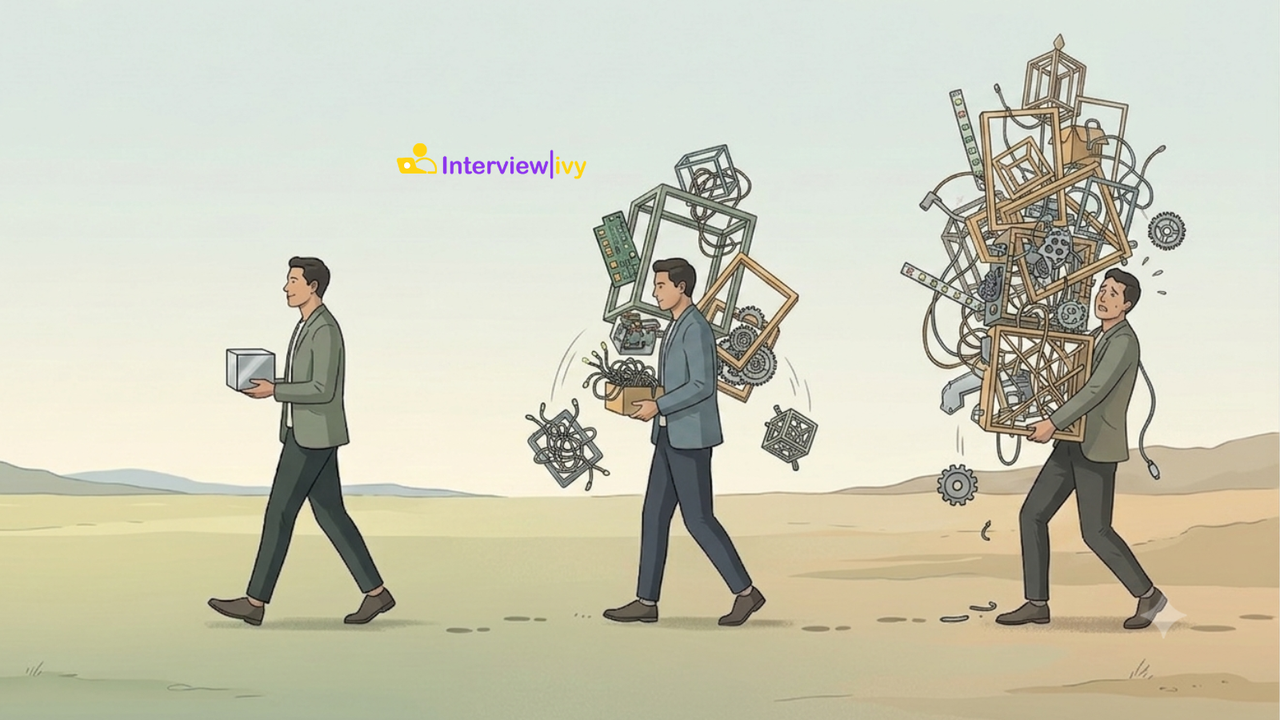
Ironically, trying too hard to sound impressive can sometimes make applicants sound less believable.
Not because ambition is bad.
But because strong communication usually feels easier than people expect.
Why Applicants Perform
Most people do not realize they are performing.
Performance often begins as protection.
Applicants assume:
- mistakes reduce approval chances,
- stronger language sounds more professional,
- sophistication signals competence.
So they begin editing themselves in real time.
Simple answers become expanded.
Normal explanations become formal.
Direct responses become carefully constructed.
Over time, the conversation starts feeling unnatural.
Questions stop becoming questions.
They become tests.
The problem is not effort.
The problem is distance.
The more applicants move away from how they naturally explain things, the harder communication becomes to trust.
Simplicity Versus Sophistication
There is an idea many applicants quietly believe:
Complicated language sounds more credible.
Usually the opposite happens.
Compare:
“I selected this institution because of interdisciplinary alignment and future growth opportunities.”
vs
“I chose this university because the program matches the direction I want to grow in.”
The second answer is not less thoughtful.
It simply creates less friction.
Sophisticated thinking does not require sophisticated wording.
Strong communicators often do something surprisingly simple:
They explain difficult ideas in normal language.
That tends to feel more confident.
Because confident people rarely need language to prove confidence.
Trust Signals
People rarely notice trust directly.
But they notice signals.
Communication often feels stronger when it sounds:
- proportionate,
- direct,
- connected,
- and comfortable.
Meanwhile, communication sometimes feels weaker when answers become:
- overly optimized,
- excessively formal,
- overloaded,
- or emotionally disconnected.
Trust rarely comes from sounding perfect.
It often comes from sounding understandable.
That does not mean becoming casual.
It means removing unnecessary effort from the listener.
When communication becomes easier to follow, credibility often increases naturally.
Natural Communication
One of the easiest preparation mistakes is rehearsing personality instead of understanding.
Applicants sometimes try to prepare:
ideal energy,
ideal tone,
ideal wording.
That usually becomes difficult to maintain.
Natural communication works differently.
Instead of controlling every sentence, applicants focus on:
- understanding decisions,
- explaining reasoning,
- staying present,
- and adapting naturally.
Something interesting happens.
Answers become shorter.
Questions feel less threatening.
Conversations start feeling lighter.
Not because preparation decreased.
Because understanding increased.
Pressure Practice
Many applicants discover this only after mock interviews.
The version of themselves that sounded impressive while practicing alone suddenly becomes difficult to maintain.
Pressure changes communication.
Long sentences become fragile.
Formal language becomes difficult to remember.
Performance becomes exhausting.
This is why realistic preparation matters.
A useful exercise:
Take one common visa question.
Answer it once normally.
Then answer it again using simpler language.
If the simpler version becomes stronger—
you probably improved communication.
Preparation should make communication easier.
Not heavier.
Final Thoughts
Visa interviews do not usually reward applicants for sounding impressive.
They reward applicants for sounding believable.
Trying too hard to optimize communication often creates:
more pressure,
more self-monitoring,
and less natural conversation.
Strong communication rarely sounds dramatic.
It usually sounds:
clear,
comfortable,
and easy to understand.
At Interviewivy, we believe preparation should help applicants communicate naturally under pressure.
Because trust is rarely built through performance.
More often, it appears when people stop trying so hard to impress.