Preparing for a US visa interview often starts with one question:
What kinds of questions will they ask?
Most applicants search for sample questions first. That makes sense. Questions feel concrete, searchable, and easier to prepare for than broad interview advice.
But US visa interviews are not designed as memory tests.
Questions are simply a tool officers use to understand whether your application, documents, intent, and explanation align.
That means preparing effectively involves understanding not only the questions themselves, but also why they are being asked.
This guide explains how US visa interview questions typically work, the types of questions applicants commonly encounter, and how to prepare in a way that feels structured rather than scripted.
How US Visa Interviews Work
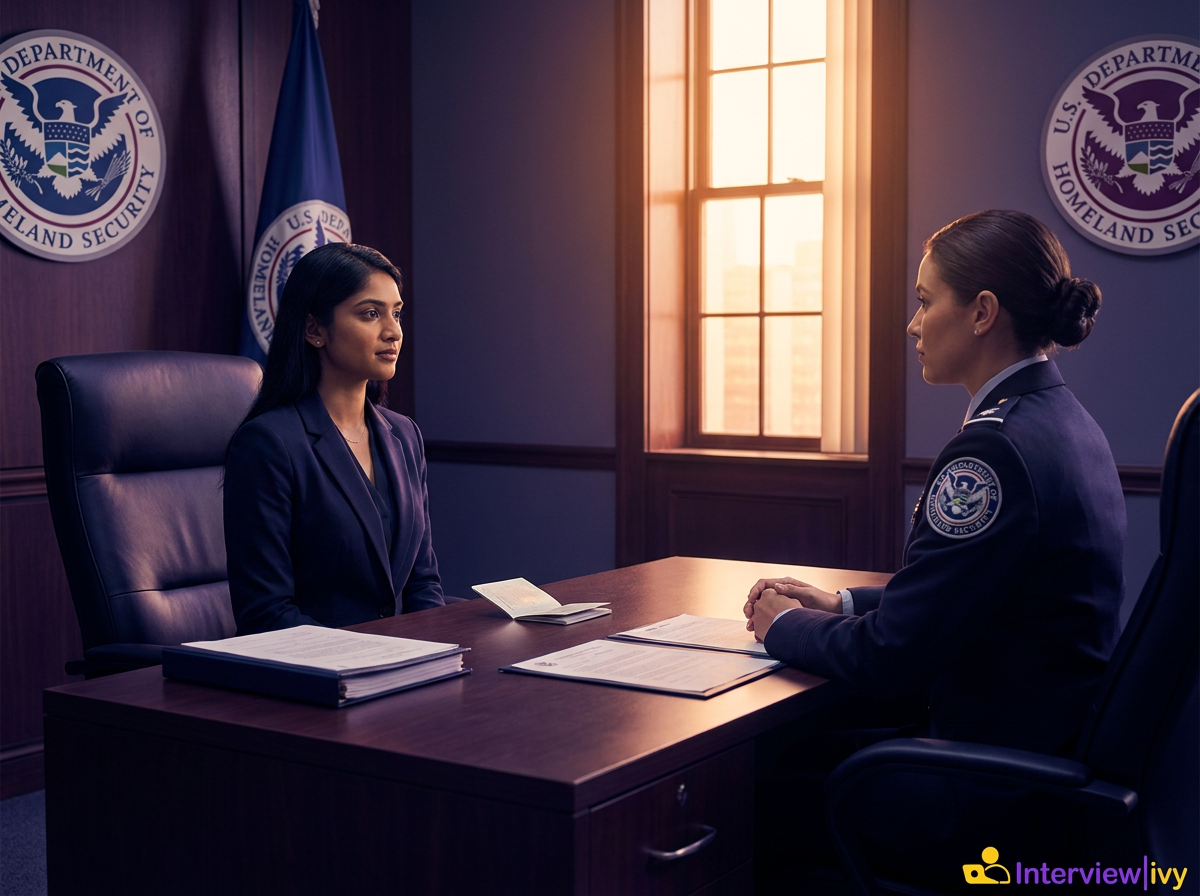
US visa interviews are generally short conversations conducted by a consular officer to evaluate information already submitted as part of the application process.
The exact process varies depending on visa type, embassy procedures, and individual circumstances, but most interviews aim to verify information and assess eligibility.
Officers are not usually looking for polished speeches.
Instead, they often evaluate whether responses are clear, consistent, and aligned with the stated purpose of travel.
That is why many applicants are surprised by how direct interviews feel.
Questions are often shorter than expected.
Follow-up questions may appear suddenly.
And answers are usually evaluated in context rather than isolation.
Categories Of US Visa Interview Questions
Although specific questions vary across visa types, most interviews tend to draw from a few recurring categories.
Background Questions
These help officers understand who you are and establish context.
Examples:
- Tell me about yourself.
- Where do you currently live?
- What do you do?
- What is your educational background?
Purpose Questions
These explore why you are applying for the visa.
Examples:
- Why are you traveling to the United States?
- Why did you choose this program/company?
- Why now?
Plans And Intent Questions
These questions help officers understand future plans and consistency.
Examples:
- What are your plans after your visit?
- How long do you intend to stay?
- What happens after completing your program?
Financial Questions
These focus on funding, support, and financial readiness.
Examples:
- Who is paying for your trip?
- How will you support yourself?
- What is your annual income?
Supporting Detail Questions
These are often follow-ups.
Examples:
- Can you explain that further?
- What do you mean by that?
- Why did you make that decision?
Understanding categories usually prepares applicants better than memorizing individual answers.
Questions By Visa Type
Different visas naturally create different interview priorities.
F1 Student Visa
Common themes:
- university choice
- academic plans
- funding
- future goals
- returning after studies
Example questions:
- Why this university?
- Why this course?
- How will you fund your education?
H1B Work Visa
Common themes:
- employer
- role responsibilities
- qualifications
- job relevance
Example questions:
- What does your employer do?
- What will your role involve?
- How does your background fit this position?
B1/B2 Visitor Visa
Common themes:
- purpose of travel
- travel plans
- financial support
- home-country ties
Example questions:
- Why are you visiting?
- Who will pay for the trip?
- When do you plan to return?
J1 Exchange Visa
Common themes:
- program objectives
- sponsorship
- exchange outcomes
Example questions:
- What is the purpose of your exchange?
- How is the program funded?
Detailed question collections can vary significantly by visa type, which is why visa-specific question banks are often more useful than generic preparation.
Questions About Intent And Background
One area applicants frequently misunderstand is intent.
People often assume there must be a perfect answer.
Usually there is not.
Intent questions are often designed to understand whether decisions appear logical and consistent.
Officers may look for alignment between:
- application details
- previous experience
- documents
- stated goals
- interview responses
This does not mean every answer must sound impressive.
It means explanations should make sense together.
Applicants sometimes prepare strong individual answers while overlooking consistency across the overall conversation.
How To Prepare Answers
Preparing for visa questions does not require writing scripts.
A more reliable approach is preparing ideas.
Start by identifying:
- your purpose
- your timeline
- your supporting facts
- your motivations
- your next steps
Then practice explaining those ideas naturally.
Good preparation usually includes:
- understanding common question categories
- reviewing application details
- practicing follow-up questions
- simplifying explanations
- identifying areas that feel unclear
The goal is not sounding rehearsed.
The goal is becoming easier to understand.
What Strong Answers Usually Have In Common
Strong visa answers are often simpler than people expect.
They tend to be:
- direct
- consistent
- relevant
- proportionate to the question
- easy to follow
They do not necessarily sound sophisticated.
They usually reduce unnecessary complexity.
Applicants sometimes assume more detail creates stronger responses.
Often clarity creates stronger responses.
That becomes especially important during short interviews.
How To Practice Realistically
Reading questions is useful.
Answering them out loud is usually more revealing.
Many applicants discover that an answer that looked clear in writing becomes difficult to explain naturally.
A practical preparation process often looks like:
- Review common question categories.
- Practice answering aloud.
- Simulate follow-up questions.
- Observe communication patterns.
- Refine and repeat.
Preparation becomes more useful when practice reveals how answers actually sound and not just how they look.
At Interviewivy, we think preparation works best when applicants combine realistic practice with feedback that helps identify patterns across multiple responses instead of optimizing one answer at a time.
Frequently Asked Questions
Are visa interviews difficult?
Most interviews are designed to be short and focused rather than intentionally difficult.
Should I memorize answers?
Memorizing complete responses often makes adaptation harder when questions change.
Do officers expect perfect English?
Clear communication is generally more important than polished language.
How long do visa interviews usually take?
Interview length varies depending on visa type and circumstances.
Should I prepare for follow-up questions?
Yes. Many interviews become easier when applicants prepare for follow-up thinking instead of isolated answers.