Preparing for a J1 visa interview can feel different from preparing for student or tourist visas because the J1 category covers several types of exchange programs.
Researchers, interns, visiting scholars, trainees, physicians, camp counselors, and exchange students may all apply under different J1 programs with different objectives and sponsorship structures.
Despite these differences, most J1 visa interviews follow a similar pattern.
Officers typically want to understand the purpose of the exchange program, how the program is funded, what the participant plans to do in the United States, and how the program fits into longer-term professional or academic goals.
This guide explains how J1 visa interviews work, common questions applicants receive, the documents usually required, and practical ways to prepare before interview day.
What Is The J1 Visa?
The J1 visa is a non-immigrant visa category designed for educational and cultural exchange programs in the United States.
Unlike student visas that primarily focus on formal degree programs, J1 visas cover a broader range of exchange opportunities including:
- research programs
- internships
- trainee programs
- visiting scholar positions
- physician exchanges
- secondary school exchanges
- work-and-travel programs
Most J1 programs involve an approved sponsoring organization that oversees the exchange experience and provides program documentation.
Because J1 categories vary considerably, interview questions often become highly specific to the applicant's program type.
J1 Interview Process Explained
The J1 interview process generally follows the same structure as many other non-immigrant visa interviews.
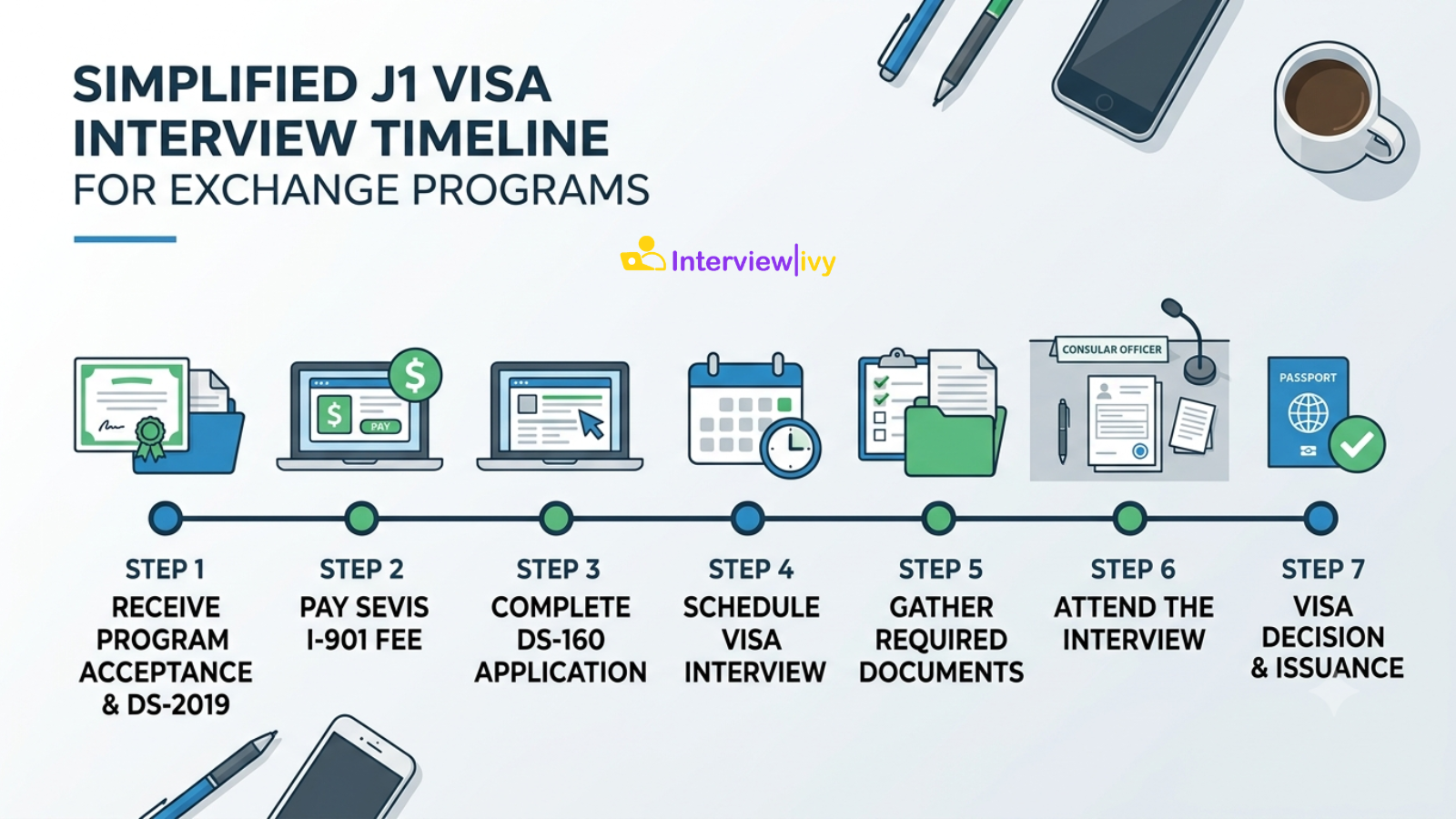
Applicants complete the DS-160 application, pay the relevant fees, schedule an appointment, and attend an interview at a US embassy or consulate.
Most interviews are relatively short.
The officer typically reviews the application alongside supporting documentation and asks questions designed to understand:
- the purpose of the exchange
- sponsor information
- funding arrangements
- program details
- long-term plans
The goal is usually not to test technical expertise.
Instead, officers often evaluate whether the applicant understands the exchange program they are joining and whether the overall explanation appears consistent.
Common J1 Visa Questions
Although questions vary depending on program type, several themes appear frequently.
Program Questions
Examples:
- What is the purpose of your program?
- Why did you choose this exchange opportunity?
- What activities will you participate in?
Sponsor Questions
Examples:
- Who is sponsoring your program?
- How did you find this opportunity?
- What is the role of your sponsor organization?
Background Questions
Examples:
- What is your educational background?
- What do you currently do professionally?
- How does this program fit your experience?
Future Plans Questions
Examples:
- What do you plan to do after the program ends?
- How will this experience help your career?
- What are your plans after returning home?
Follow-Up Questions
Examples:
- Can you explain that further?
- Why this program instead of alternatives?
- What specifically will you be working on?
Preparing by question category is usually more effective than memorizing responses.
(Internal link → J1 Visa Interview Question Bank)
Documents Required
Document requirements vary depending on the specific J1 category and local embassy procedures.
Most applicants commonly prepare:
Core documents:
- passport
- DS-160 confirmation
- interview appointment confirmation
- Form DS-2019
- SEVIS payment confirmation
Supporting documents may include:
- sponsor documentation
- invitation letters
- academic records
- employment documentation
- financial evidence
- program information
Applicants should always verify current requirements directly through embassy instructions and sponsor guidance.
Organization generally matters more than carrying excessive paperwork.
Funding And Program Questions
Funding is often an important part of J1 interviews because exchange programs may involve different financial arrangements.
Applicants may be funded by:
- sponsoring organizations
- universities
- governments
- employers
- research institutions
- personal funds
Officers may ask questions such as:
- Who is funding your participation?
- What expenses are covered?
- Will you receive a stipend?
- What support does the sponsor provide?
Applicants usually benefit from understanding these details clearly before the interview.
Returning Home Requirement Explained
Some J1 applicants become subject to the two-year home-country physical presence requirement under Section 212(e) of the Immigration and Nationality Act.
Whether this applies depends on factors such as:
- program funding source
- field of specialization
- country-specific agreements
- program category
Applicants often hear this described as the "two-year home residency requirement."
Not every J1 applicant becomes subject to it.
If applicable, participants may need to return to their home country for a specified period before becoming eligible for certain future immigration benefits.
Because individual circumstances vary significantly, applicants should review their program details carefully and consult official guidance where necessary.
Common Preparation Mistakes
Many preparation mistakes are surprisingly similar across visa categories.
Common issues include:
- not understanding sponsor details
- giving inconsistent explanations
- confusing program objectives
- preparing scripted answers
- overlooking follow-up questions
Applicants sometimes spend more time memorizing responses than understanding the exchange opportunity itself.
In practice, a clear understanding of the program usually creates stronger interviews than polished scripts.
Frequently Asked Questions
Is the J1 visa interview difficult?
Most interviews are designed to verify information rather than create pressure.
Will officers ask technical questions about my field?
Technical questions are generally less common than questions about the exchange program itself.
Do I need to memorize answers?
Preparing explanations is usually more useful than memorizing scripts.
How long do J1 visa interviews usually take?
Interview length varies depending on the applicant and program type.
Does every J1 visa include the two-year home residency requirement?
No. Applicability depends on the specific program and circumstances.
Applicants should verify their own situation using official documentation and guidance.