Preparing for a US tourist visa interview can feel surprisingly uncertain.
Many applicants assume the process is complicated because interviews are often short and decisions can feel difficult to predict. That uncertainty usually leads people to collect sample answers, memorize explanations, or search for “correct” responses.
In practice, B1/B2 visa interviews are generally more structured than they appear.
Most interviews focus on understanding why someone wants to travel, whether the purpose of travel is clear, and whether the information shared during the interview aligns with the application.
This guide explains how B1/B2 visa interviews work, common questions applicants receive, documents to prepare, how officers evaluate intent, and practical ways to prepare before interview day.
What Is The B1/B2 Visa Interview?
The B1/B2 visa interview is part of the US visitor visa application process.
B1 visas are generally associated with business-related travel, while B2 visas are commonly associated with tourism, family visits, medical visits, and similar temporary purposes. Many applicants apply under the combined B1/B2 category.
The interview is conducted by a consular officer and is typically designed to evaluate eligibility based on submitted application information and interview responses.
These interviews are usually short.
Applicants are often surprised that conversations feel direct rather than detailed.
The purpose is generally not to test memory or create pressure. Instead, officers typically evaluate whether travel plans, intent, and supporting details appear understandable and consistent.
Typical Questions Asked
Questions vary depending on travel plans and background, but most B1/B2 interviews tend to revolve around recurring themes.
Travel Purpose Questions
Examples:
- Why are you traveling to the United States?
- What is the purpose of your visit?
- Why did you choose this time to travel?
Trip Details Questions
Examples:
- How long will you stay?
- Which cities do you plan to visit?
- Do you already have travel plans?
Financial Questions
Examples:
- Who is paying for the trip?
- What do you do professionally?
- How will you cover expenses?
Personal Background Questions
Examples:
- Are you married?
- Do you have family members in the US?
- What do you currently do?
Follow-Up Questions
Examples:
- Can you explain that?
- Why this trip?
- What happens after your return?
Preparing by question categories is usually more effective than memorizing complete responses.
(Internal link → B1/B2 Visa Question Bank)
Documents To Carry
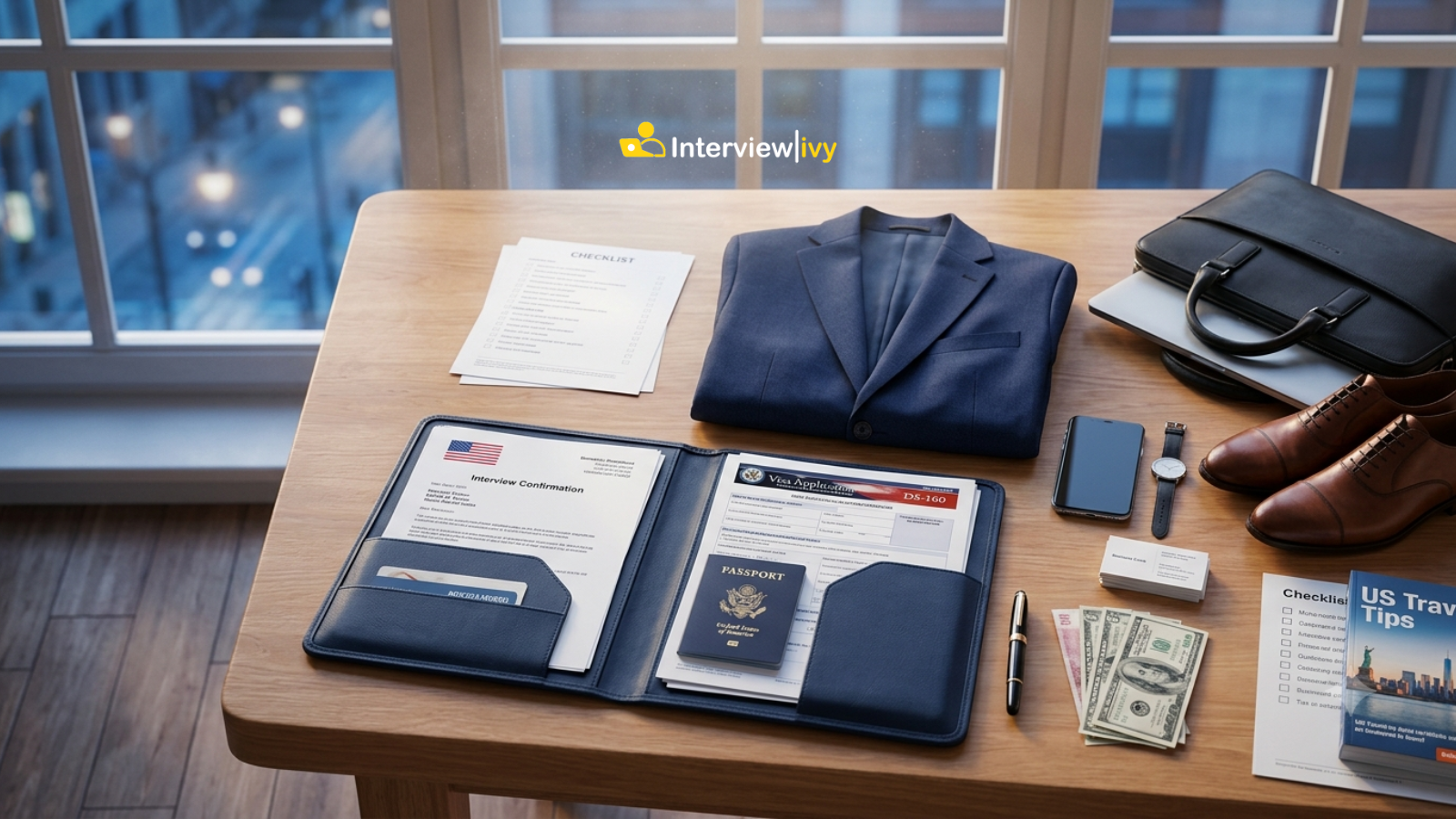
Document expectations may vary depending on local instructions and individual circumstances, but applicants commonly prepare documents that support identity, travel plans, and financial readiness.
Core documents:
- passport
- DS-160 confirmation
- appointment confirmation
Supporting documents may include:
- travel itinerary
- employment documentation
- financial documentation
- invitation letters (if applicable)
- proof of residence
- supporting travel information
Documents should support clarity rather than create overload.
Carrying excessive paperwork rarely replaces being able to explain plans clearly.
Always confirm requirements using official embassy instructions.
Showing Purpose And Intent Clearly
One of the most common misconceptions about tourist visa interviews is that applicants need impressive answers.
Usually they need understandable answers.
Officers often try to understand practical questions:
Why are you traveling?
Why now?
How does this trip fit your circumstances?
Applicants sometimes create unnecessary complexity by adding too much explanation.
Simple and direct communication often creates stronger interviews than highly polished responses.
Purpose does not need to sound extraordinary.
It usually needs to sound coherent.
Common Reasons Applicants Struggle
Many applicants leave interviews feeling that they “said something wrong.”
Often the issue is less dramatic.
Common challenges include:
- giving longer answers than necessary
- sounding overly prepared
- becoming inconsistent across responses
- changing explanations under pressure
- misunderstanding simple questions
These issues are often communication problems rather than knowledge problems.
Preparation becomes more useful when applicants practice explaining decisions naturally instead of collecting scripts.
How Officers Assess Ties To Home Country
This area is often misunderstood.
Applicants sometimes assume they need to prove intent using one perfect answer.
In practice, officers may evaluate the overall context of the application.
That can include factors such as:
- current employment
- education
- family situation
- long-term plans
- travel purpose
- consistency of explanation
No single factor guarantees an outcome.
The interview usually works as part of a broader assessment.
That is why consistency often matters more than complexity.
Interview Preparation Checklist
A practical preparation process often includes:
- Review your application information.
- Clarify your travel purpose.
- Prepare common question categories.
- Practice answering aloud.
- Review supporting documents.
- Prepare for follow-up questions.
Preparation becomes more effective when applicants focus on understanding rather than memorization.
At Interviewivy, we believe realistic preparation becomes more useful when applicants combine practice with feedback that helps identify communication patterns instead of optimizing individual answers.
Frequently Asked Questions
Is the B1/B2 visa interview difficult?
Most interviews are designed to be short and focused rather than intentionally difficult.
Should I memorize answers?
Preparing explanations and key details is usually more adaptable than memorizing scripts.
Do I need confirmed hotel bookings?
Requirements vary by situation and local guidance.
Will officers ask many questions?
Some interviews involve only a few questions while others may include follow-ups.
Can nervousness affect performance?
Yes. Nervousness can influence pacing and clarity, which is why realistic preparation often helps.